 NexAIX-官方博客
How to choose an AI relay station? Don't rush to compare model counts and unit prices. First, check five pass-through criteria that can be verified on the spot with requests: tier parameters, cache control, model specifications, overload behavior, and billing accuracy. These five determine whether new features will work after launch, whether costs can be calculated clearly, and whether you can hold someone accountable when issues arise—they decide success or failure earlier than price.
Take OpenAI's removal of the long-context limit for GPT-5.6 series Fast mode on August 5, 2026, as an example. Prompts exceeding 272K tokens can now run in Fast mode, with speedup up to 2.5x compared to Standard mode. Upstream parameters are iterating quickly, but many relay layer updates lag behind. An interface that works today may not pass through new parameters next month.
Each of the five criteria below includes a minimal request and a pass/fail threshold, so you can verify within your trial quota.
First, Clarify Boundaries: What Relay Stations Solve and Don't Solve
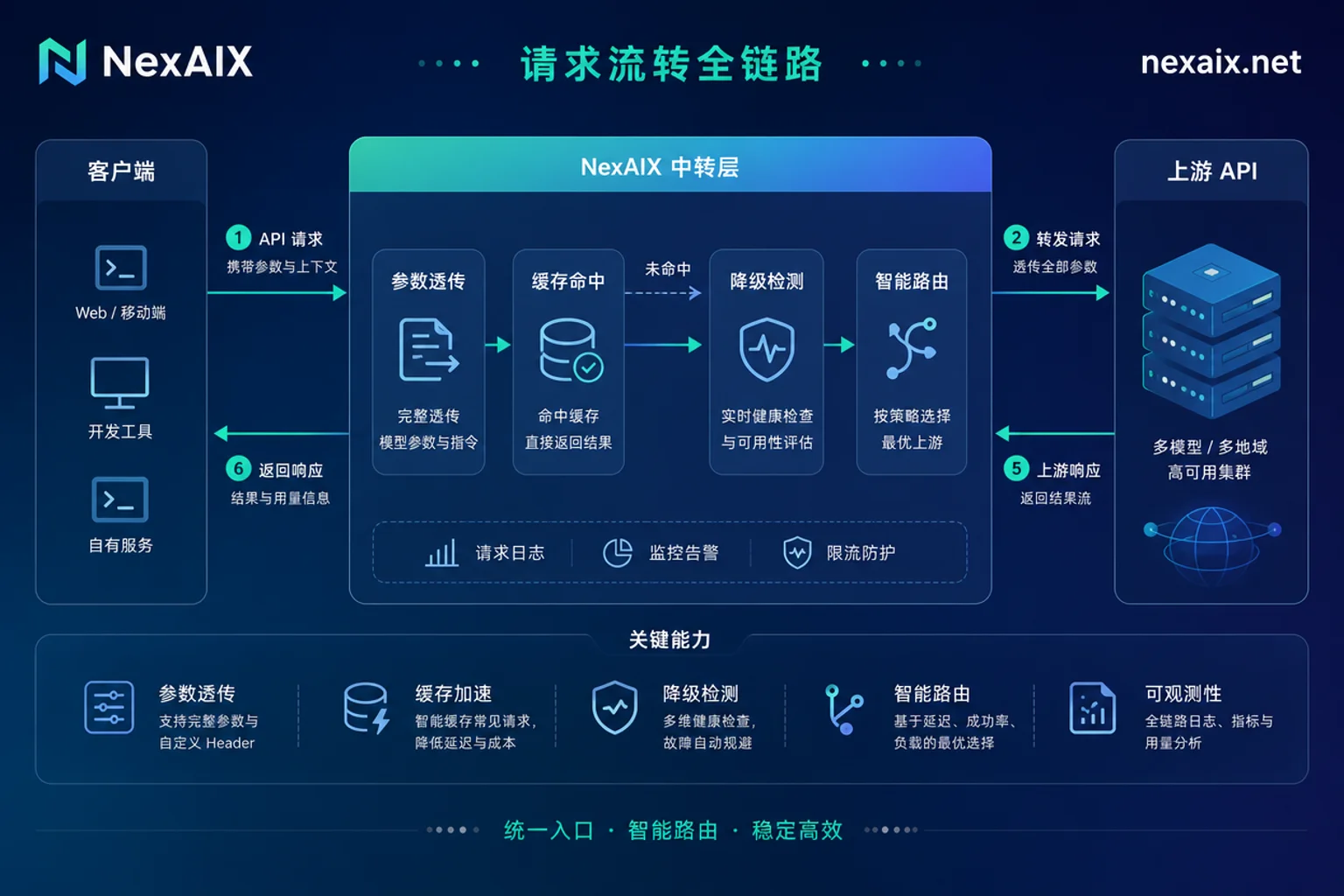
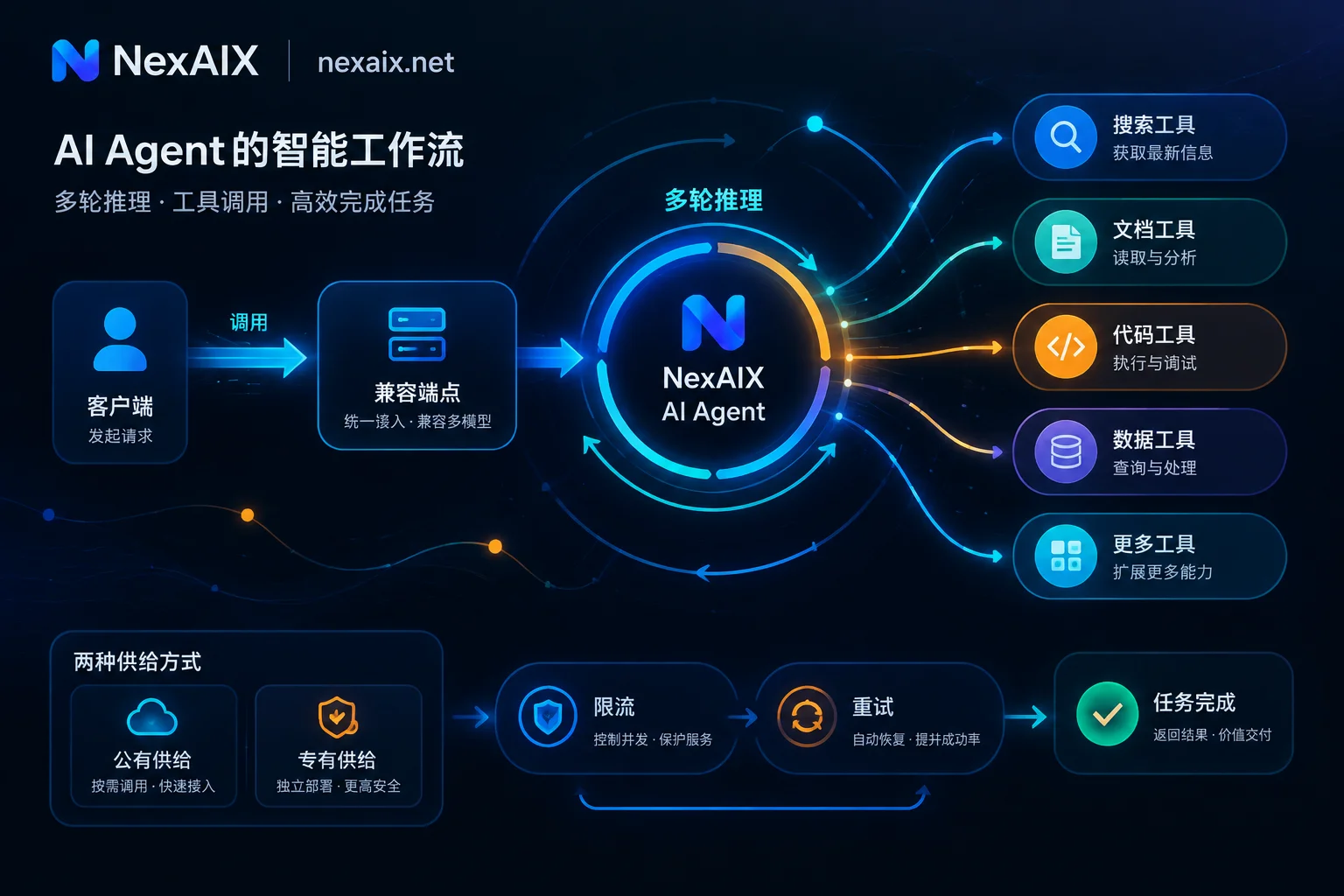
Before answering how to choose an AI relay station, clarify what relay stations solve and what they don't. The reasonable value of a relay station is: unified OpenAI-compatible endpoint, unified billing, multi-model switching, and eliminating the need for multiple API key management. It lets a team use a single base_url to call multiple models and view bills and usage in one place.
But relay stations don't make models faster or stronger by themselves, don't change the nature of upstream rate limits, and can't make up for upstream capability gaps. If the upstream doesn't have a feature, no relay optimization can conjure it. Thus, the criteria below only assess "pass-through and fidelity," not "better than official." Using the wrong metrics can misjudge providers.
Criterion 1: Can Service Tier Parameters Pass Through As-Is?
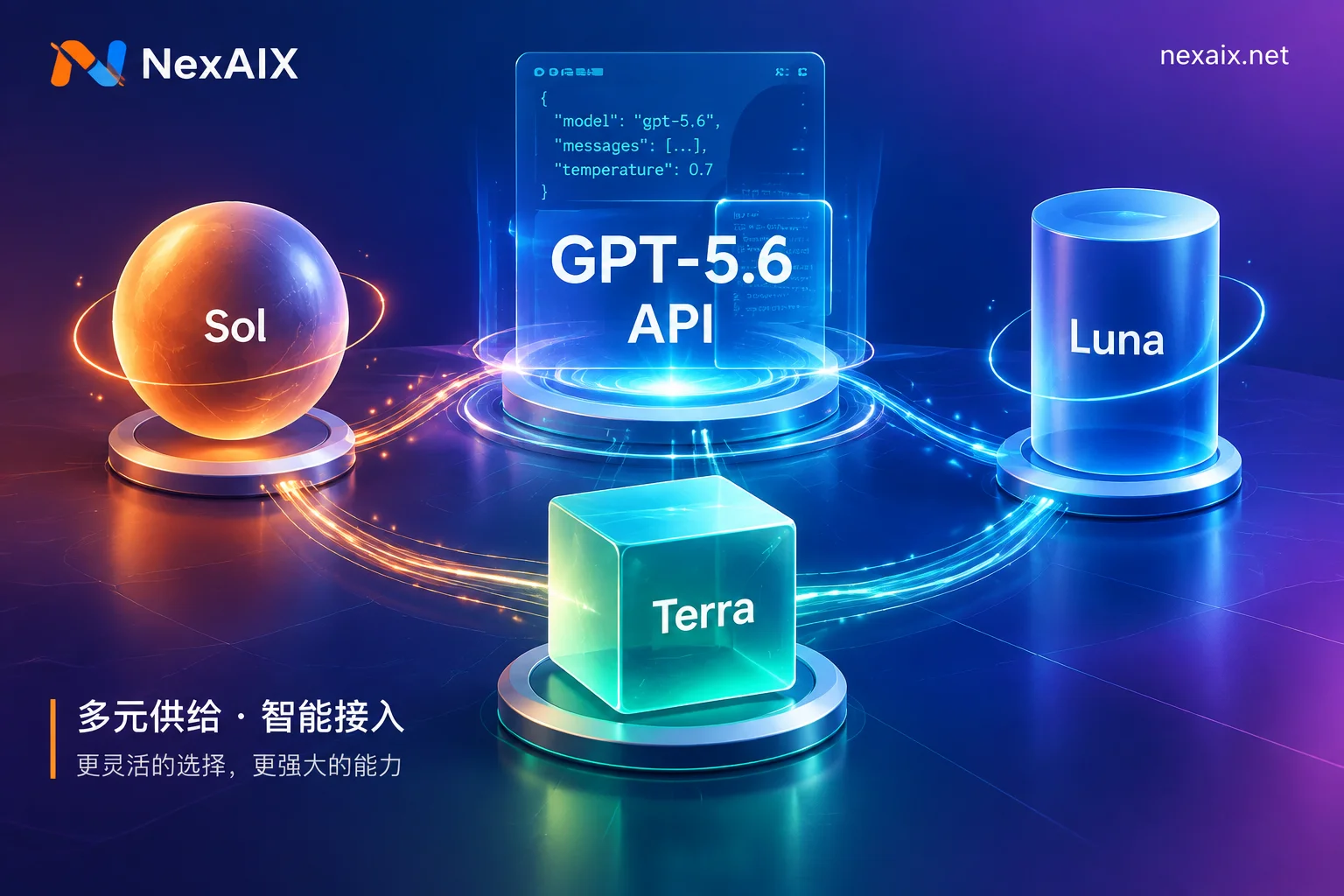
Why it matters: Filtered tier parameters can rob long-document tasks of TTFT (time to first token) benefits. On 2026-08-05, OpenAI added long-context support beyond 272K tokens for Fast mode of GPT-5.6 Sol, Terra, and Luna, with up to 2.5x speedup over Standard mode.
Minimal verification request: Use a very long prompt (e.g., 300K tokens) with and without the tier parameter, send several requests each, compare TTFT and total latency distributions, and check if the response echoes the parameter.
Which metric to watch: Median and P90 of TTFT and total latency, plus the service tier field in the response body.
Pass/fail: If TTFT drops noticeably with the parameter and the tier info is echoed, pass-through is normal. If results are identical with no errors, the parameter is silently ignored. If you get an "unknown parameter" error, that actually indicates explicit handling, which isn't a serious problem. Note: This feature is specific to that OpenAI model batch, not all providers.
Criterion 2: Cache Control Parameters and Hit Rate
Why it matters: KV cache can skip the Prefill phase and reduce time-to-first-token and costs. If a relay station round-robins nodes or alters message order, cache misses occur. On 2026-08-05, DeepInfra launched Prompt Cache Retention, allowing per-request KV cache retention of 5 minutes or 1 hour, with discounted cache rates. But this is DeepInfra's specific implementation, not an industry standard.
Minimal verification request: Fix a long prefix (e.g., 2K tokens), send multiple sequential requests, and observe whether TTFT drops each round.
Which metric: TTFT curve and cache-related statistics in usage (naming varies by provider; check API docs).
Pass/fail: If TTFT drops significantly and cache fields have values after consecutive requests, caching works. If TTFT stays high and cache fields are zero, it may be round-robin or request rewriting. Ask whether cache retention parameters are supported and whether cache hit statistics are exposed. For a full algorithm on cache hit rate and cost optimization, see "AI API Cost Optimization and Cache Hits".
Criterion 3: New Model Launch Speed and Spec Consistency
Why it matters: How quickly a relay station integrates new upstream models and whether specs match determines how early you can use new capabilities. On 2026-07-21, SiliconFlow first launched Kimi K3 (2.8 trillion parameters, 1M context, native multimodal), with input pricing from $3.0/M tokens, offering both OpenAI and Anthropic compatible interfaces. But "launching a model with the same name" doesn't mean specs are identical.
Minimal verification request: Gradually increase prompt length to find the true context limit; send a small image to test multimodal; hit both Chat Completions and Anthropic compatible endpoints.
Which metric: Actual context window length, whether image input works, and whether both protocol endpoints respond correctly.
Pass/fail: If the actual context window is far smaller than claimed (e.g., claims 1M but tests at only 128K) or image input errors, specs are reduced. Differences between the two protocols are protocol differences, not relay flaws. Ask providers to note launch times in changelogs.
Criterion 4: Behavior Under Load and Abnormal Conditions
Why it matters: The most dangerous is not rate limiting but silent downgrading to a cheaper model during limits, causing unnoticeable output quality degradation.
Minimal verification request: Push concurrency to the rate limit threshold, check if a standard 429 status code with retry hints is returned, and observe whether the model field stays consistent; use a fixed seed or fixed question set for regression comparison of output style.
Which metric: Correct 429 response, model field consistency, output style stability.
Pass/fail: If you get a standard 429 with retry hints and consistent model, it's normal. If you get 200 but with a changed model field or output style shift, there's silent downgrade—stop testing immediately and ask. For detailed troubleshooting, see "AI API 429 Error Troubleshooting" and "Detecting Silent Downgrade in Multi-Model API Gateways".
Criterion 5: Billing and Logging Consistency—Can the Bill Match Usage?
Why it matters: Relay stations unify billing. If the usage field is missing or accounts are opaque, you can't verify costs, especially when cache hits involve discounted rates.
Minimal verification request: Run a set of fixed requests with known token counts and reconcile with local statistics against the bill.
Which metric: Whether usage is returned in the response, whether cache hits are billed separately, whether bill details can be traced by request ID, and whether log retention scope is documented.
Pass/fail: If local stats match the bill within a reasonable margin (e.g., within 5%) and cache hits have a separate billing item, it's basically fine. If usage is missing or accounts are messy, demand an explanation; otherwise, costs become uncontrollable.
Minimal Reproduction Script and Thresholds for the 5 Criteria
Let's turn "AI relay station selection" into an executable checklist. Below is a reusable OpenAI SDK skeleton. Replace base_url and model to test. All tests should run under the same code with different base_url and model for horizontal comparability:
import openai

client = openai.OpenAI(
    base_url="你的中转站base_url",  # 如 https://api.example.com/v1
    api_key="你的key"
)

# 测试1:服务档位参数透传
resp = client.chat.completions.create(
    model="gpt-5.6-sol",
    messages=[{"role": "user", "content": "长文本..."}],
    extra_body={"service_tier": "fast"}  # 若支持
)
print(resp.usage, resp.model)
The specific values of service_tier depend on your upstream provider's current API docs. This merely demonstrates how parameters pass through with requests.
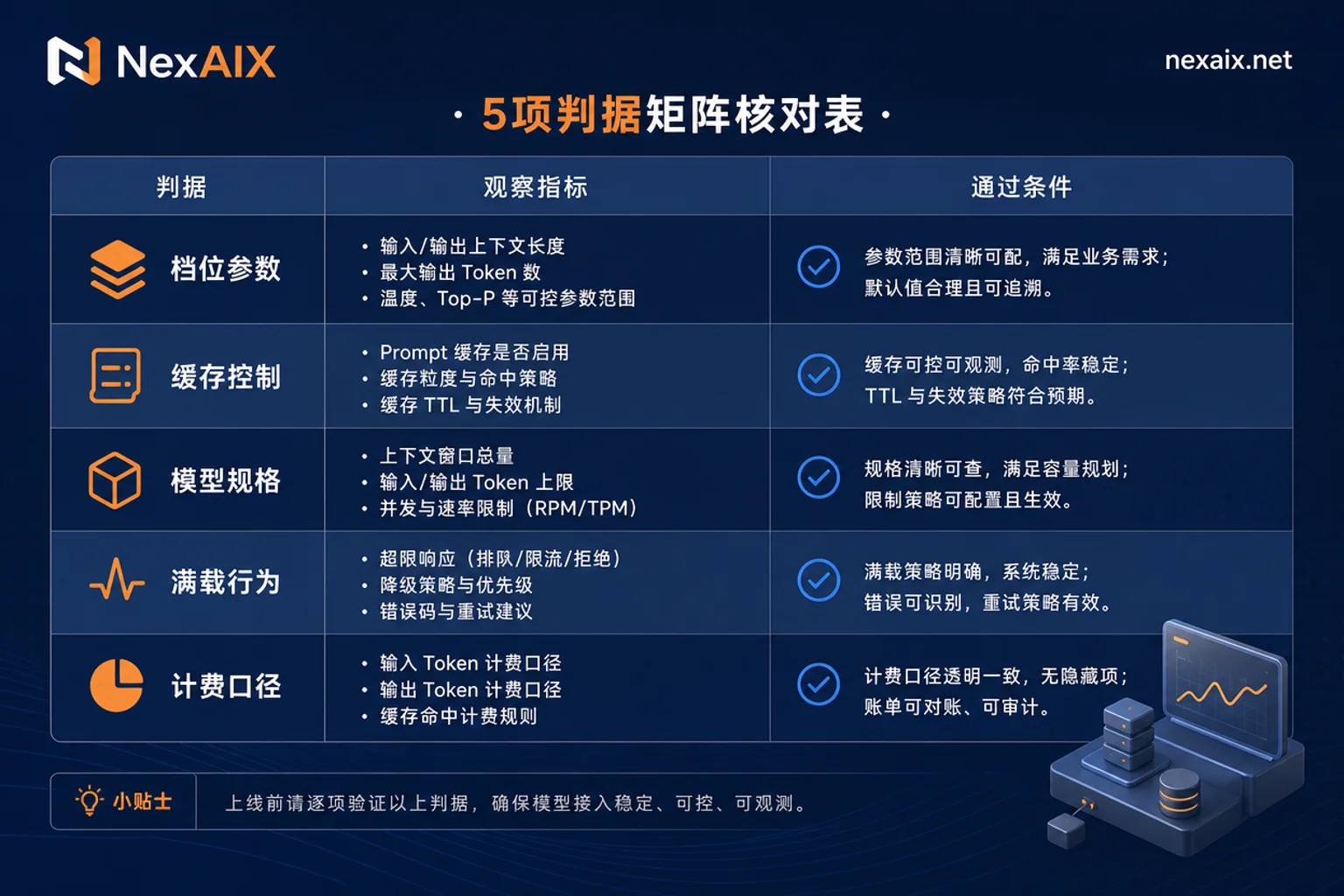
Threshold checklist table:
| Criterion | Minimal Request Shape | Metric to Watch | Pass Condition | Ask When Failing |
|---|---|---|---|---|
| Tier parameter pass-through | Very long prompt, sent multiple times with/without tier parameter | TTFT, total latency, tier field in response | TTFT drops noticeably with parameter and tier echoed | "Do you filter service_tier-like parameters? Do you error when unsupported?" |
| Cache control | Fixed long prefix with consecutive requests | TTFT curve, usage cache stats (per provider docs) | TTFT drops and cache field has value | "Do you support cache retention parameters? Why is cache hit low?" |
| New model specs | Longer prompts, image requests, dual-protocol calls | Context limit, multimodal, protocol responses | Matches claims and both protocols work | "Why is context only X? Why does multimodal error?" |
| Overload behavior | Concurrency stress test to rate limit | 429 response, model field, output stability | Standard 429, consistent model, stable style | "Do you switch models under load? Why does model field change?" |
| Billing consistency | Fixed requests with known token counts | usage, bill details, cache billing | Error <5%, cache billed separately | "Why is usage missing? How are cache discounts reflected?" |
Normal Implementation Differences That Shouldn't Count Against
- Unknown parameters explicitly erroring instead of being silently swallowed: not a defect; indicates explicit validation.
- Field name differences across protocol endpoints: inherent protocol differences.
- Features not available upstream: relay not supporting them is normal.
- Fixed latency baseline due to regional network: doesn't mean relay is slow.
- Different cache granularity across models: upstream feature.
Commitment Checklist to Request Before Signing and Trial Acceptance Order
How to choose an AI relay station? The last step is turning verbal capabilities into written commitments. Ask providers for: model source and deployment method, log retention scope, overload behavior (whether 429), model field semantics, new model launch cadence and changelog, status page and error code docs.
Trial execution order: First run criteria 4 and 3 (overload and model specs), then 1 and 2 (pass-through and cache), then reconcile bills (criterion 5), eliminating the most serious issues in the shortest time.
For example, NexAIX has a public base_url of https://api.nexaix.net/v1 with OpenAI-compatible interface. Under load, it returns standard 429 with retry suggestions rather than silently switching to cheaper models. The model field in the response matches the actual executing model, and zero-log policy retains only request ID, model name, token count, timestamp, and status code billing/troubleshooting metadata. Use your trial quota to run through the five criteria yourself, then compare NexAIX's model page and changelog to verify available models and specs.
FAQ
Will the relay station swallow Fast mode parameters?
Possible. If request latency with and without parameters is identical and no error occurs, the parameter is likely filtered. To verify: send a very long prompt with and without the tier parameter several times each, compare TTFT and whether the parameter is echoed in the response. If swallowed, ask if service_tier-like parameters are supported.
Will prompt cache hit through a relay station?
Depends on node round-robin and request consistency. If the relay round-robins nodes or alters message order, prefix inconsistency causes cache misses. To verify: fixed long prefix with consecutive requests, observe TTFT drop and cache stats in usage.
Does the model field from a relay station match the actual model?
Most legitimate relays keep it consistent, but silent downgrades may cause inconsistency. To verify: stress test concurrency to the rate limit, check if the model field stays consistent with the request, and compare output quality. If inconsistent, stop using immediately.
How long does a relay station typically take to launch new models?
No fixed standard. Fast ones launch within days of release; slow ones can take weeks. Check the provider's changelog and ask about their launch time commitment. For Kimi K3, SiliconFlow launched on 2026-07-21, which is a relatively fast case.
How to quickly test if a relay station downgrades?
Use a fixed seed and fixed question set, call the official API directly and through the relay, compare output JSON structure and content quality. If outputs differ significantly, or the model field changes under load, downgrade likely exists. For a more systematic approach, see "How to Check for Watered-Down AI Relay Stations".


Comments(0)