 NexAIX-官方博客
GPT-5.6 Sol API currently costs $4.00/1M tokens for input, $20.00/1M tokens for output, $0.40/1M for cached reads, and $5.00/1M for cache writes. This pricing went into effect on August 21, 2026, and OpenAI has committed to keeping it at least until November 21, 2026. What you really need to recalculate is your weighted unit price, not the list price.
How to Read the GPT-5.6 Sol API Pricing: Four Billing Tiers and Promotion Window Boundaries
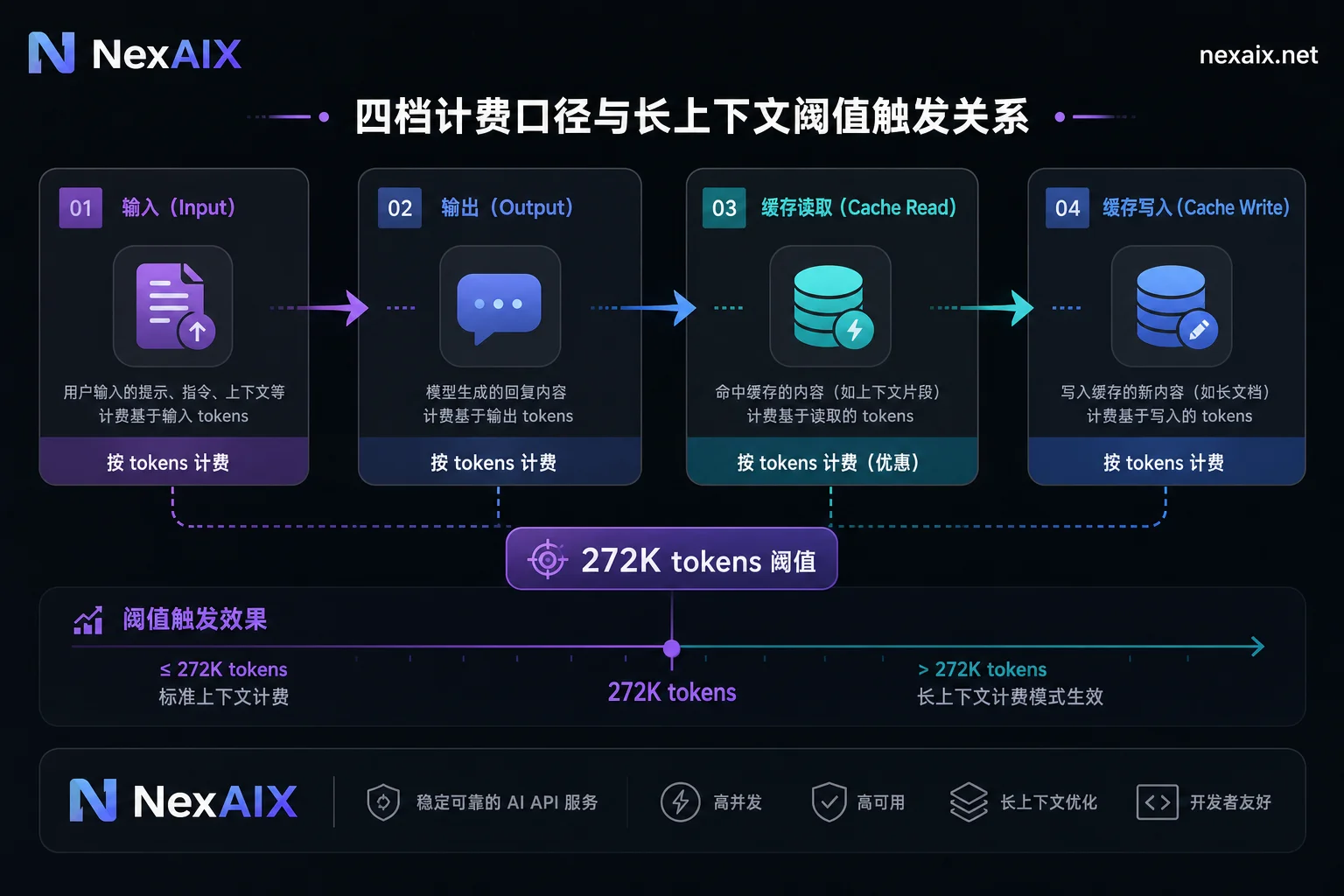
This price adjustment involves four billing tiers, with the largest reduction on output, which dropped by 33.3%. Also note that when a single request input exceeds 272K tokens, long-context billing is triggered, multiplying input by 2x and output by 1.5x—a detail that's easy to miss.
| Billing Item | Promotional Price (/1M tokens) | Original Price (/1M tokens) | Reduction/Notes |
|---|---|---|---|
| Base Input | $4.00 | $5.00 | 20% off |
| Output | $20.00 | $30.00 | 33.3% off |
| Cached Input (cache read) | $0.40 | — | Equivalent to 90% discount on base input |
| Cache Write | $5.00 | — | 1.25x base input price |
It's worth noting that both OpenAI and AWS Bedrock announcements use the phrase "at least until November 21, 2026," meaning the pricing may be extended, adjusted, or reverted to the original rates after that date. So, when budgeting, don't treat $4.00/$20.00 as permanent. This article's pricing and promotion period are based on OpenAI's official pricing and model documentation (developers.openai.com), which are currently the only publicly verifiable sources; third-party aggregator rates may differ, so always check the pricing page of your actual calling channel before committing.
Use Your Own Request Distribution: The Input-Output Ratio Determines How Much This Price Cut Benefits You
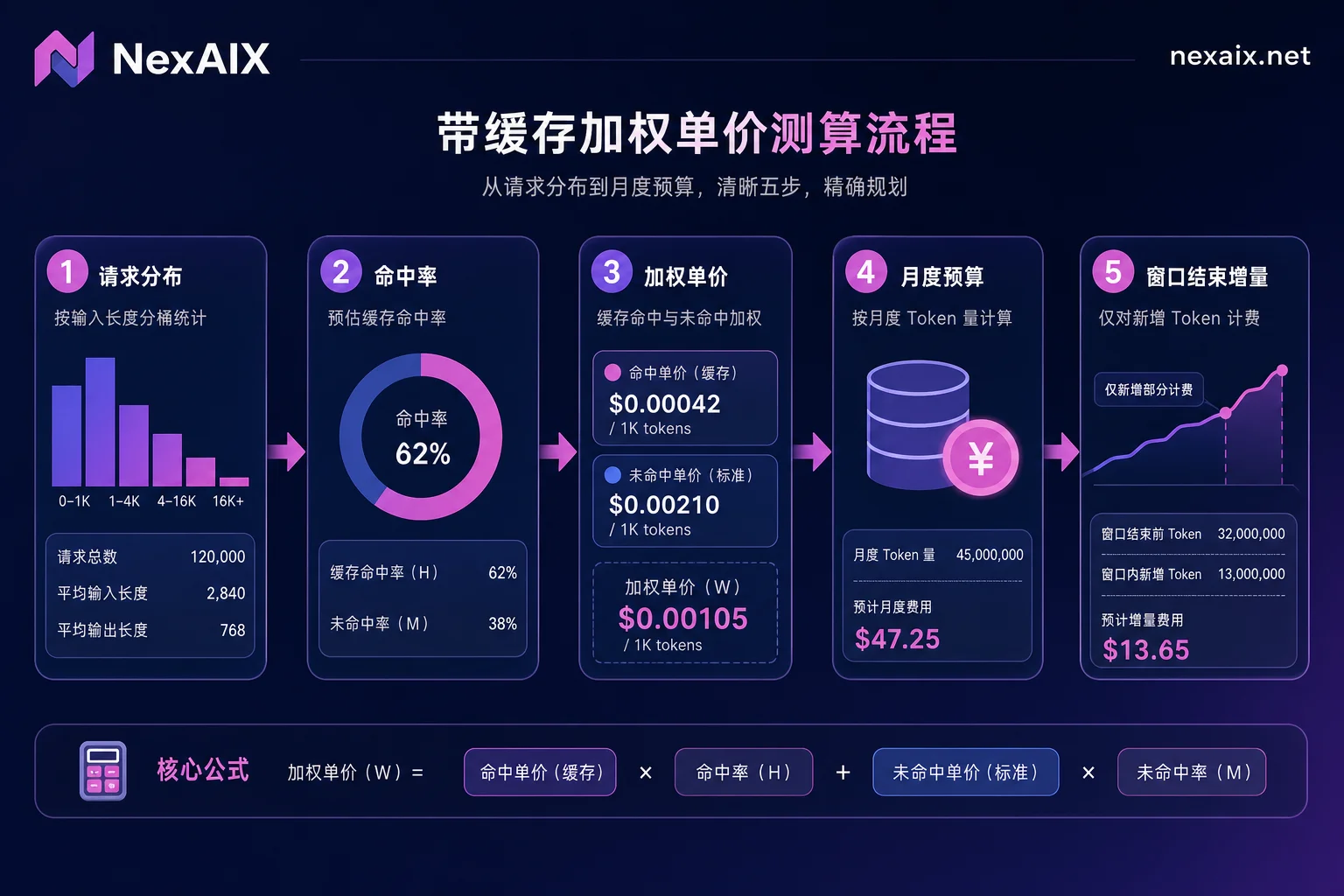
The table below shows example calculations based on assumed request distributions. Replace the distribution percentages with your actual 30-day log data. The unit prices are weighted US dollars per million tokens. Different traffic patterns have vastly different input-output ratios. Weighted unit price = input ratio × input price + output ratio × output price. Since the output price dropped more than input, the higher your output ratio, the greater the benefit from this price cut.
| Traffic Type | Input Ratio | Output Ratio | Weighted Unit Price (Promo) | Weighted Unit Price (Original) | Reduction |
|---|---|---|---|---|---|
| Long-document summarization | 80% | 20% | $7.20 | $10.00 | 28% |
| Agent multi-turn calls | 70% | 30% | $8.80 | $12.50 | 29.6% |
| Reasoning chains | 40% | 60% | $13.60 | $20.00 | 32% |
For example, with 1,000 requests, assuming an average of 1,000 input and 1,000 output tokens per request, long-document summarization would cost about $7.2 per thousand requests, while reasoning chains would cost $13.6. This directly shows that whether switching back to the flagship reasoning model is worthwhile must be evaluated per traffic type, not with a one-size-fits-all conclusion.
Where to Check Prompt Caching Hit Rate: Turn Estimates into Verifiable Numbers
To accurately calculate actual costs, you can't rely solely on estimates. The cached_tokens field in the API response returns the number of cached tokens, and the console's Usage or Prompt Caching Dashboard shows actual hit rates. By using explicit breakpoints or automatic caching, you can keep fixed system prompts, tool definitions, and knowledge base retrieval snippets consistently at the prefix, reducing repeated input cost from $4.00/M to $0.40/M. The weighted unit price with caching = input ratio × [(1 − hit rate) × input price + hit rate × cache read price] + output ratio × output price. If you're writing to cache for the first time, you also need to account for the cache write cost at $5.00/1M. Low-reuse prefixes might actually become more expensive due to write costs, so evaluate this in advance.
Ultrafast Tier: What We Know and What We Don't
Currently, OpenAI's Ultrafast mode is still in targeted preview, aimed at high-throughput, low-latency inference scenarios, but the commercial pricing multiplier and GA timeline have not been announced. Therefore, in your monthly budget calculation model, treat it as a pending parameter and reserve a separate line; don't include it in the main calculation. Latency test results from the preview tier cannot be extrapolated as cost or performance commitments for the official tier.
Fallback Plan for End of Promotion Window: How to Prepare Downgrade Trigger Lines and Model Switches
Treat November 21, 2026 as an operational event that needs to be orchestrated in advance. First, maintain both promotional and original price (input $5.00/M, output $30.00/M) algorithms in your budget model to calculate the monthly cost increase after the window ends. Second, set downgrade trigger lines; for example, if a traffic type's monthly cost share exceeds a threshold, switch to a lower-cost model. Finally, make the model name a configurable parameter rather than hard-coded, so switching doesn't require business logic changes. The official wording is "at least until," and the value of a plan is that you won't need to change code on the fly, regardless of whether prices rise or fall. The weighted method mentioned in the article How to Calculate Monthly Costs for Pay-as-You-Go AI APIs can be directly applied.
Executable Checklist for Recalculating GPT-5.6 Sol API Monthly Costs (6 Items)
Follow these six steps:
- Calculate the real input/output token distribution for each traffic type over the past 30 days.
- Check whether any requests exceed the 272K long-context threshold.
- Get actual cache hit rates from the dashboard, not estimates.
- Calculate the weighted unit price with caching, and multiply by the expected monthly request volume.
- Recalculate using original prices to determine the incremental cost after the window ends.
- Reserve a separate budget line for unpriced capabilities like Ultrafast.
Additionally, if you're already using the OpenAI Chat Completions-compatible interface (base_url https://api.nexaix.net/v1),只需修改 model parameter to compare costs across models without changing business logic. We recommend checking the NexAIX model page and pricing page to verify the current specifications and availability of GPT-5.6 Sol, and run a test with your actual request distribution before finalizing your budget.
Frequently Asked Questions
How much does GPT-5.6 Sol API cost per million tokens now?
Input $4.00/1M, output $20.00/1M. If cache reading is enabled, the hit portion costs only $0.40/1M. Note this is the promotional price, guaranteed by OpenAI at least until November 21, 2026.
What's the price difference between input and output tokens for gpt-5.6 sol?
Based on the current promotional prices, the output price of $20.00/1M is approximately 5 times the input price of $4.00/1M (this multiplier is derived from the public unit prices, not an official figure). However, the output price reduction is larger (33.3% vs 20%), so traffic with higher output ratios benefits more from this price cut.
How long will the GPT-5.6 Sol price reduction last?
Officially, it's "at least until November 21, 2026." After that, it may be extended, adjusted, or reverted to original prices, so it's advisable to plan accordingly.
Where can I check prompt caching hit rate?
You can see the actual hit rate in the OpenAI console's Usage or Prompt Caching Dashboard. Additionally, the cached_tokens field in the API response returns the number of cached tokens for each request.
Does Ultrafast mode cost extra?
There is no publicly available pricing multiplier or billing details yet; it's still in targeted preview. If your business relies on this tier, consider reserving a separate line in your budget until official announcements are made.
Is it worth switching back to the flagship reasoning model?
First, calculate the weighted unit price with caching and monthly total for that traffic type using your last 30 days of logs, then compare it against your current low-cost model's actual bill. Decide on a per-traffic basis; this article doesn't provide cross-model price comparisons, as the sources cited don't cover other models' pricing.



Comments(0)